Transtar Insurance Brokers
November 18, 2025

7 Proven Tips to Help Your Fleet Deal With Winter Driving Hazards Safely

Why Winter Driving Demands a Fleet-Wide Safety Strategy

When temperatures drop and roads freeze, winter becomes one of the most dangerous seasons for trucking and logistics operations. For fleet managers, winter driving isn’t just about keeping vehicles on the road; it’s about keeping drivers, assets, and deliveries safe and on time.

Fleet-wide preparation minimizes downtime, prevents accidents, and protects people and equipment. Below are 7 proven strategies your fleet can implement immediately, now including detailed safe-driving rules, fuel practices, and equipment prep designed for real-world winter conditions.

Know the Hazards: What Winter Throws at Commercial Fleets

Ice, Snow, and Slippery Surfaces

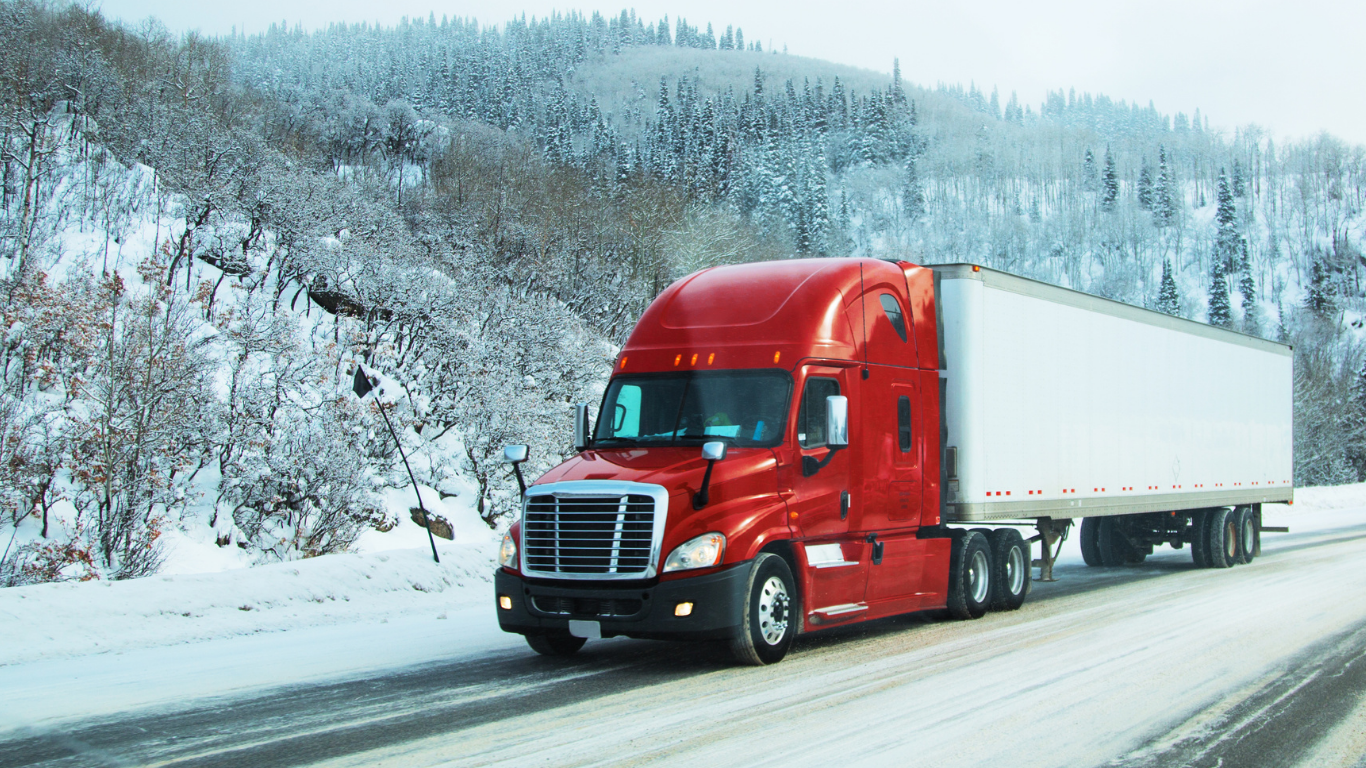
Ice and compacted snow reduce traction, increasing the risk of skids or jackknifes. Black ice, nearly invisible, poses an even bigger threat for heavy combinations that need longer stopping distances. Snow and slush require extra stopping distance. On ice, you cannot stop. Do not drive on ice; stay where you are and monitor weather and road conditions. When it is time to go, do not be the first to drive; watch some other trucks go first.

Visibility Loss: Snow, Fog, Frost, & Night Driving

Snowfall, fog, and shorter daylight hours crush situational awareness. Frosted glass and caked sensors cut reaction time and hide hazards.

Cold-Weather Mechanical Stress

Batteries weaken, diesel can gel, DEF misbehaves in deep cold, and air brake systems can freeze without proper care. Winter magnifies small maintenance gaps into road calls.

Tip 1: Prepare and Winterize Every Vehicle in the Fleet

Pre-Season Maintenance Checklist (Oil, Coolant, Brakes, Wipers)

  • Engine oil: Use winter-grade oil suitable for operating temps.
  • Coolant: Verify correct type and level.
  • Washer fluid: Swap to winter blend to prevent freezing.
  • Brakes: If equipped with auto-adjusters, adjust before you start your day and verify operation.
  • Wipers: Replace if streaking; confirm they’re robust enough for heavy precipitation.

Tires, Batteries, Lights, and Chains: What “Ready” Really Means

  • Tires: Gauge them; maintain 100 PSI cold inflation as specified. Install winter or 3PMSF all-season tires with adequate tread.
  • Batteries: Inspect cables; ensure terminals are tight and corrosion-free.
  • Lights: Turn everything on, including flashers, to confirm proper function.
  • Chains: Carry the required number; inspect for damage before the storm.

The “10 & 2” Cold Rule and Wind-Smart Parking

  • 10 & 2 Rule: If temps will be below 10°F for 2+ hours while stopped, keep the engine running to prevent fluid freeze-ups.
  • Wind-Smart Parking: In extreme cold, park with wind hitting the back of the trailer, not the tractor grille, when possible.

Tip 2: Safe Driving, Policies Your Drivers Can Follow Every Mile

Plan the Trip: Route + Weather (and where to check conditions)

Know your route and check the weather repeatedly throughout the day. For live road conditions across all 50 states, use SafeTravelUSA (state links hub):

Speed, Spacing (12–15 seconds), and Smith System Keys

  • Reduce speed. Start slowly to “read” traction.
  • Increase following distance to 12–15 seconds in adverse weather.
  • Avoid driving side-by-side with other vehicles; leave yourself an out.
  • Aim high in steering and practice all five Smith System Keys to keep your eyes up, create space, and maintain escape routes.

No Distractions, No Cruise Control, Know When to Stop

  • No distractions. Attention stays on safe operation, period.
  • Cruise control OFF in bad weather (don’t rely on it for spacing).
  • Fatigue or sickness? Stop. You have the authority and responsibility to shut down if you’re too fatigued, ill, or conditions are unsafe, then call dispatch and report the decision.

Tip 3: Equip Drivers with Training, Tools, and Emergency Protocols

Winter Modules: Black Ice, Controlled Braking, Skid Recovery

Deliver annual winter training covering recognizing black ice (bridges, overpasses, and shaded curves), smooth steering/braking, downshifting to slow, and skid recovery without over-correcting.

Communications, Incident Reporting, and 24/7 Support

Give every driver emergency contacts, an incident-reporting flow, and two-way communication. A 24/7 fleet support line lets dispatch proactively check in during storm warnings.

Tip 4: Leverage Fleet Tech for Real-Time Decisions

Telematics & Predictive Maintenance

Use telematics to monitor harsh events, cold-start trends, DPF status, and battery health. Predictive alerts help you fix issues before a road failure.

GPS, Weather Overlays & Dashcams

Pair routing with live weather/closure feeds to avoid ice corridors and chain-control zones. Dashcams support post-incident analysis and continuous coaching, and they deter false claims.

Tip 5: Enforce Speed and Distance, Backed by Data

Adjusted Limits in Storms

Set winter speed caps and apply them automatically in your driver scorecards. The worse the conditions, the bigger the margin you mandate.

Braking Practices and Jackknife Prevention

Encourage gentle, progressive braking and engine braking/downshifting where appropriate. Remember: a heavy truck at 65 mph on ice can take 600+ feet to stop; doubling distance beats doubling bravery.

Tip 6: Fatigue Management in Harsh Conditions

Scheduling for Winter Efficiency

Deep-cold driving is mentally taxing. Shorten continuous drive blocks, add breaks, and schedule around storm windows rather than through them.

Rest Stops, Warm Areas, and Shut-Down Criteria

Prefer rest areas with heated facilities. In blizzards or whiteouts, delay or suspend operations. Safety beats schedule every time.

Tip 7: Fuel Strategy & DEF in Extreme Cold

  • Use the correct seasonal fuel. Colder-weather states often dose bulk tanks with anti-gel additives; verify before fueling.
  • Run off the top half of the tanks. Keeping tanks half-full or more reduces gelling risk; this applies to diesel and DEF.
  • Bunk heater: Confirm it works before you need it.
  • Operating right in adverse weather prevents most issues; prep before entering severe conditions.

Personal Safety Equipment: Keep Drivers Upright, Warm, and Ready

Three Points of Contact & Ice Awareness

Enter/exit using three points of contact. Steps, handles, catwalks, and the ground may be iced. Slow down, ensure a solid hand grip and stable footing, and no rushing.

  • Use the correct seasonal fuel. Colder-weather states often dose bulk tanks with anti-gel additives; verify before fueling.
  • Run off the top half of the tanks. Keeping tanks half-full or more reduces gelling risk; this applies to diesel and DEF.
  • Bunk heater: Confirm it works before you need it.
  • Operating right in adverse weather prevents most issues; prep before entering severe conditions.

Clothing, Blankets, Food/Water, and Heater Checks

Carry extra winter clothing, gloves, jackets, and warm blankets or a cold-weather sleeping bag. Keep non-perishable food and water on board. Ensure the bunk heater is functional.

Fleet Winter Emergency Kit: The Standard Loadout

  • Heavy-duty blankets & thermal clothing
  • Tire chains & traction mats
  • Flashlight, spare batteries, and flares/triangles
  • Jumper cables & first-aid kit
  • Non-perishable food & bottled water
  • Sand or salt for traction assistance

This ensures no driver is stranded unprepared in freezing conditions.

Proactive Planning = Fewer Incidents, Lower Costs

Winter doesn’t have to wreck your schedule or your safety record. With disciplined vehicle prep, clear safe-driving policies (12–15-second spacing, no cruise control, distraction-free driving), rigorous training, smart fuel strategy, and tech-assisted routing & monitoring, you’ll cut incidents, control costs, and deliver reliably, no matter what the weather throws at you.

Start at least one month before first frost, ideally early fall, to complete maintenance, training, and kit checks.

Do daily pre- and post-trip inspections with a winter checklist: tires (100 PSI cold), lights, brakes, fluids, chains, and battery connections.

Target 12–15 seconds. Increase further in heavy snow, ice, or low visibility.

No. Turn cruise off in adverse weather and manage spacing manually.

Transtar Insurance Brokers
November 18, 2025